If you’re a landlord, you’ll likely have heard the term HMO.
An HMO is a licence that must be obtained when letting out a house in multiple occupation (HMO). As specialists in this field, we at Rosevale Letting know that HMO rules and requirements can seem complicated, but do not fear.
In this blog, we’ll walk you through exactly what falls into the category of an HMO property, what is required for an HMO licence in the UK, and what happens if you don’t comply. We’ll also shine a light on the key differences between obtaining an HMO in Scotland and England.
What is an HMO property?
As mentioned above, HMO stands for ‘house in multiple occupation’.
Although many properties will have multiple occupants, to fall into this category, you will have three or more unrelated tenants living together as individuals and sharing toilet, bathroom and kitchen facilities in Scotland, and five or more unrelated occupants in England.
HMOs are a legal requirement governed by the Housing (Scotland) Act 2006 in Scotland and the Housing Act 2004 in England. HMOs have been part of Scottish property legislation since 2000, due to the Civic Government (Scotland) Act 1982 (Licensing of Houses in Multiple Occupation) Order 2000.
HMO vs standard rental properties
The main difference between HMO properties and standard rental properties is purely down to the number of occupants.
Properties do not need an HMO when they are being rented out by a single household, such as a family, a couple or a single tenant.
HMO licences are required when the property is rented to multiple households, such as students or professionals who are sharing the property and each are paying rent individually.
Who grants an HMO licence?
In both Scotland and England, HMO licences are granted by the local council where the property is located. This means different councils can interpret the regulations differently, or could impose slightly different conditions, so it’s imperative you check the requirements in your local authority.
What is required for an HMO licence in the UK?
HMO properties are more tightly regulated than standard rentals, with higher safety standards and stricter management responsibilities to uphold. Below, we will start to unpack exactly what these are.
HMO standards for accommodation
HMO properties must have adequate kitchen and bathroom facilities for the number of tenants living there, i.e. they must have enough cookers, sinks, storage and fridge-freezer space to accommodate everyone, as well as sufficient toilets and baths or showers. Typically, there needs to be one bathroom for every 4 to 5 tenants.
Communal spaces for tenants, such as a living room, aren’t a necessity but can be important, particularly for properties with higher numbers of tenants. Local councils can refuse HMO licences on these grounds.
Scotland & England differences
A point of difference between Scotland and England HMO properties is that, in England, there are minimum bedroom sizes which are as follows: 6.51 square metres for one adult, 10.22 square metres for two adults.
In Scotland, there is no minimum size, but rooms must be of ‘a reasonable size’ for the number of occupants. It’s worth noting that despite there being no national requirement, local councils can set their own, so be sure to check this out.
HMO fire safety regulations
This one is a crucial part of HMO licensing laws.
HMO properties must have fire doors in all bedrooms, living areas and the kitchen and escape routes must be clearly illustrated. Additionally, there must be fire extinguishers or fire blankets in the property.
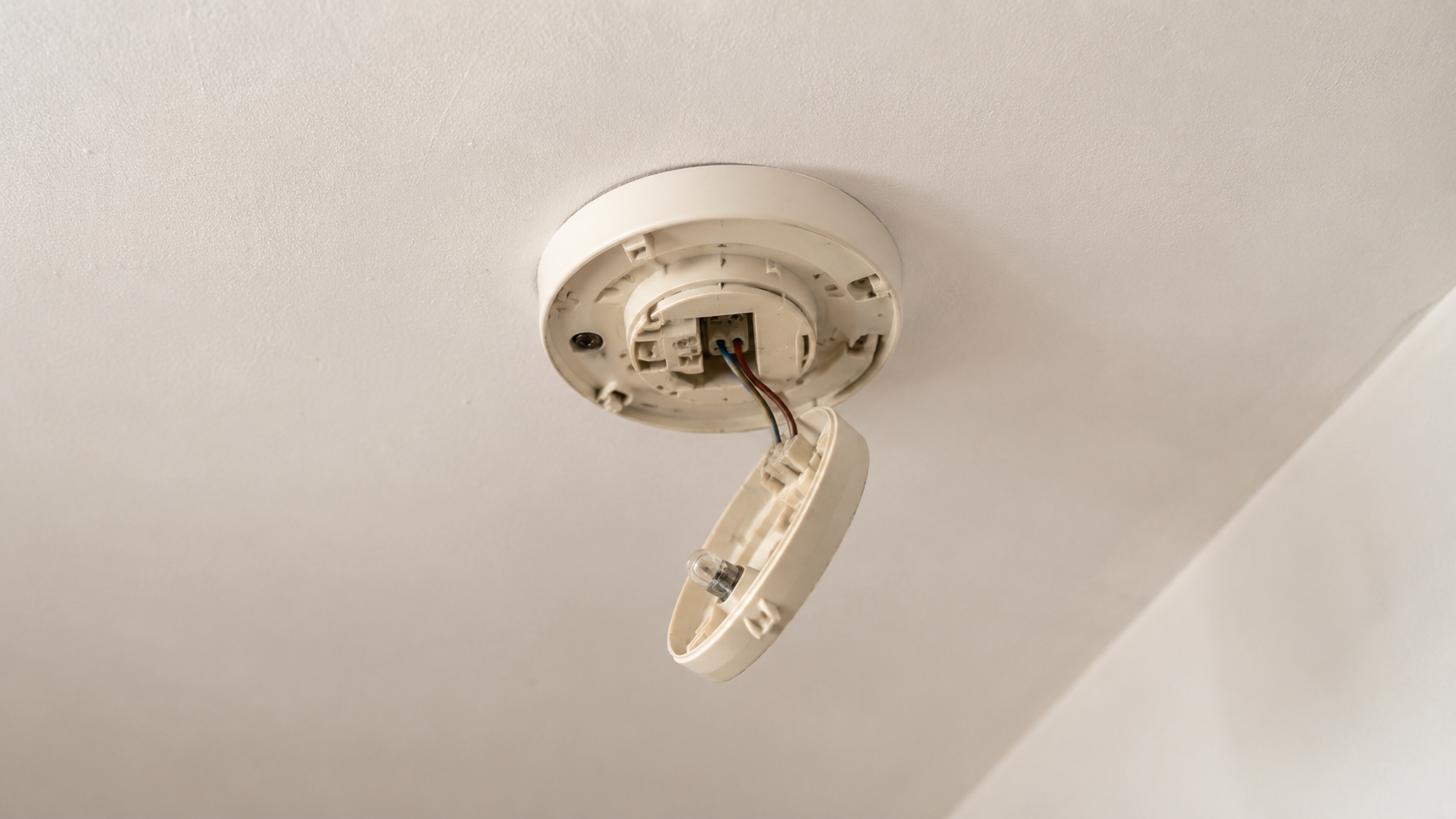
Carbon monoxide alarms must be installed in any room with a carbon-fuelled appliance like a boiler, open fire or wood burner. Separately, furniture and furnishings must meet fire safety regulations.
In Scotland, interlinked fire and smoke alarms must be installed and maintained (this is standard in all properties across Scotland).
HMO gas safety regulations
The legal requirements are the same across the UK when it comes to gas safety regulations, and these regulations apply to all landlords, whether they have an HMO property or not.
All landlords must arrange an annual gas safety inspection of their property carried out by a Gas Safe registered engineer who will inspect all gas appliances, flues and pipework and issue a Gas Safety Certificate. It is the landlord’s responsibility to ensure gas appliances, flues and pipework are maintained and in safe working order.
This Gas Safety Certificate must be given to all HMO tenants within 28 days of the check taking place and given to new tenants before they move in.
HMO electrical safety regulations
Electrical installation condition report
All landlords across the UK must have the property’s fixed electricals, this means its wiring, sockets and fuse boxes, inspected and tested at least every 5 years. This inspection must be carried out by a qualified electrician, who will provide an Electrical Installation Condition Report (EICR).
The EICR is a requirement for HMO landlords, and councils often ask for it when issuing or renewing an HMO licence. A copy of this report must be provided to existing tenants within 28 days of the inspection taking place and provided to new tenants before they move in.
If the EICR flags up any issues, the landlord must have them fixed by a qualified electrician within 28 days and written confirmation that this has been done must be given to both tenants and the local council.
Portable Appliance Testing (PAT)
Many councils across the country require PAT testing of electrical appliances in HMOs from items supplied by the landlord, such as kettles, microwaves, washing machines and fridges.
In Scotland, PAT testing is mandatory every 5 years.
HMO health & safety regulations
In addition to the health and safety-related regulations outlined above, there are more general regulations that must be complied with for HMO properties.
These include rules around heating in every room, adequate natural and artificial light throughout the property and ventilation in kitchens and bathrooms to prevent damp and mould.
In Scotland, the rules around energy efficiency and damp prevention are stricter than in England, as outlined in the Housing (Scotland) Act 2006.
HMO licensing isn’t just about the property; it’s about the landlord too
The fit & proper person test
An HMO landlord in the UK must be deemed to be a ‘fit and proper person’ and local authorities will check whether an individual has any criminal convictions, previous breaches of landlord law, been refused an HMO licence in the past or, in England, been placed on the Rogue Landlords Database.
Suitable property management
An HMO landlord must show they have suitable property management in place.
This includes things like a system for logging repairs and maintenance, legally compliant tenancy agreements and procedures for dealing with tenant complaints and antisocial behaviour.
Licence fee
Landlords are required to pay an HMO licence fee to their local authority. It’s worth noting that this will vary depending on both where the property is located and the size of the property.
In Scotland, a licence fee covers a 3-year period, whereas it covers a 5-year period in England.
Key differences between HMO licences in Scotland & England
As we touched on above, HMO licences are required in both Scotland and England.
They are largely the same, but there are some differences between the two countries. We’ll go over some of these differences below:
HMO fire safety regulations
Scotland
Fire safety rules are stricter in Scotland than in England, with a requirement for interlinked, mains-powered smoke and heat alarms in all homes in Scotland, including HMO properties. Fire doors and escape routes are a must.
England
Smoke alarms are required on every floor and carbon monoxide alarms are required in fuel-burning rooms. Some local councils may require fire doors and escape routes in HMO properties.
HMO threshold rules
Scotland
An HMO licence is required for any property with 3 or more tenants from 3 or more households living together.
England
An HMO licence is required when there are 5 or more tenants from 5 or more households living together.
Note, there are some variations to this; for example, smaller HMOs may be required when there are 3-4 tenants living together in certain local councils.
HMO licence application
Scotland
Scottish Law requires an HMO licence to be obtained before a tenant takes residence. This means landlords must prepare well in advance of renting out their property.
England
An HMO licence application can be submitted simultaneously with tenant occupancy.
Penalties for non-compliance
The penalties associated with HMO non-compliance are severe.
In Scotland, operating an unlicensed HMO is a criminal offence, carrying a maximum £50,000 fine. Your licence can be refused or revoked permanently.
In England, fines are unlimited, or you could face a civil penalty of up to £30,000 per offence.
Landlords can be ordered to repay up to 12 months of rent to tenants and risk being placed on the Rogue Landlords Database and banned from letting out any more properties.
Here to help!
As you can see from this blog, HMO licensing is a vast subject to get your head around as a landlord. It’s enshrined in law and carries hefty ramifications for non-compliance.
We hope this blog has gone some way towards making you feel more equipped with what an HMO property is and the requirements for an HMO licence in the UK. If you are keen to read more on this topic, check out this handy guide we prepared earlier.
If you have any further questions or would like to discuss an aspect of the HMO licence in more detail, please don’t hesitate to contact our team.